
As West Bengal moves steadily toward the 2026 Assembly elections, the political atmosphere in the state has grown increasingly charged. A sharp exchange between Chief Minister Mamata Banerjee and Union Home Minister Amit Shah has brought national security, electoral integrity, and centre–state relations into the spotlight. Addressing a public rally in Bengal, Banerjee delivered a provocative remark questioning the Centre’s repeated claims of terrorism and infiltration in the state, asking whether the government itself was responsible for the Pahalgam terror attack if such threats were allegedly flourishing under its watch.
Background of the Political Confrontation
The latest political clash has emerged against the backdrop of the Special Intensive Revision (SIR) exercise of electoral rolls being conducted ahead of the state elections. The revision process aims to update voter lists by identifying duplicate or illegal entries. While the Election Commission has maintained that the exercise is routine and necessary, Mamata Banerjee has accused the Bharatiya Janata Party of using it as a political tool to destabilise her government.
According to the Chief Minister, the SIR exercise is being weaponised to create an atmosphere of distrust and potentially justify extreme constitutional measures. She has alleged that the Centre is attempting to interfere in Bengal’s democratic processes under the guise of administrative reforms.
The Pahalgam Remark and Symbolic Attack
During a rally in Bankura district, Mamata Banerjee responded strongly to Amit Shah’s claims that Bengal had become a haven for infiltrators and anti-national elements. In a sharp rhetorical counter, she asked whether the Centre itself had carried out the Pahalgam terror attack if terrorists were supposedly operating freely under central oversight.
Her statement was widely interpreted as an attempt to turn the BJP’s national security narrative back on the Union government. In the same speech, Banerjee used symbolic references from the Mahabharata, describing Prime Minister Narendra Modi as Duryodhana and Home Minister Amit Shah as Dushyasahan. The references were meant to portray the central leadership as arrogant and unjust, further intensifying the political messaging.
autotestinghub.com | theautosfreak.com | autoglidez.com
thesporttrophy.com | purecbdnet.com
Centre’s Allegations on Infiltration and Security
Amit Shah, during his visits to West Bengal, has repeatedly accused the Trinamool Congress government of failing to control illegal infiltration, particularly along the India–Bangladesh border. He has claimed that the state government’s alleged inaction poses a serious threat to national security and law and order.
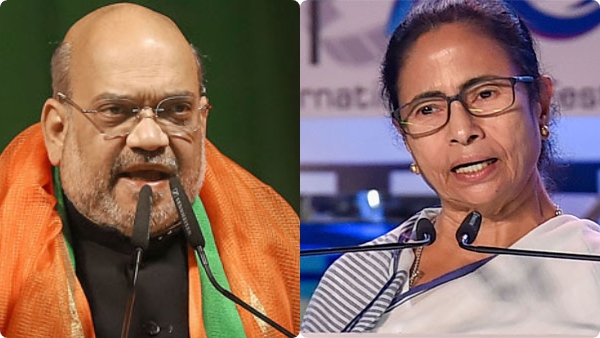
The Home Minister has also linked infiltration to broader issues such as crime, corruption, and voter manipulation. He has asserted that a change in government is necessary to ensure stronger border management and promised decisive action if the BJP comes to power in the state.
Pahalgam Attack and Political Sensitivities
The Pahalgam terror attack in Jammu and Kashmir earlier this year remains a deeply sensitive national issue. The incident resulted in significant civilian casualties and renewed debate over security preparedness and intelligence failures. While Mamata Banerjee has consistently condemned terrorism and expressed solidarity with victims, she has also questioned security lapses and criticised the Centre’s handling of the aftermath.
Her reference to Pahalgam during the Bengal rally was not intended to trivialise the tragedy but to challenge the selective political use of security issues. By invoking the attack, Banerjee aimed to highlight what she views as double standards in assigning responsibility for security failures.
Political Strategy and Electoral Calculations
The exchange between Mamata Banerjee and Amit Shah reflects a broader political strategy on both sides. For the BJP, issues such as infiltration, national security, and electoral integrity form the backbone of its campaign narrative in Bengal. For the Trinamool Congress, the focus remains on defending state autonomy, countering allegations of misgovernance, and portraying the Centre as overreaching.
This confrontation is also indicative of increasing political polarisation in the state. Strong language, symbolic references, and emotionally charged statements are being used to consolidate voter bases and shape public perception ahead of the elections.
Implications for Bengal’s Political Landscape
The escalation of rhetoric has multiple implications. It underscores how national security issues are becoming central to state-level electoral battles. It also raises concerns about the impact of such polarised discourse on democratic institutions and public trust.
As the election campaign intensifies, voters in West Bengal are likely to be exposed to competing narratives that blend governance, identity, and security. The challenge for political leaders will be to address legitimate concerns without further deepening divisions.
Conclusion
Mamata Banerjee’s pointed question linking the Centre to the Pahalgam attack marks one of the sharpest political attacks in the current phase of Bengal politics. It reflects not only a personal clash between two senior leaders but also a deeper struggle over narrative control, federal balance, and electoral legitimacy. As the 2026 Assembly elections approach, such confrontations are likely to become more frequent, shaping the tone and direction of political discourse in the state.
